How Laser Dentists Repair Cavities and Gum Disease Without Drills and Scalpels
If the sound of a dental drill makes you feel uneasy, visiting a laser dentist can be a game-changer. Many patients find that vibrating drills and manual scalpels are their biggest obstacle to booking regular dental appointments. Fortunately, laser dentistry offers a more precise, gentle, and modern approach to protecting your smile.
The benefits of seeing a laser dentist
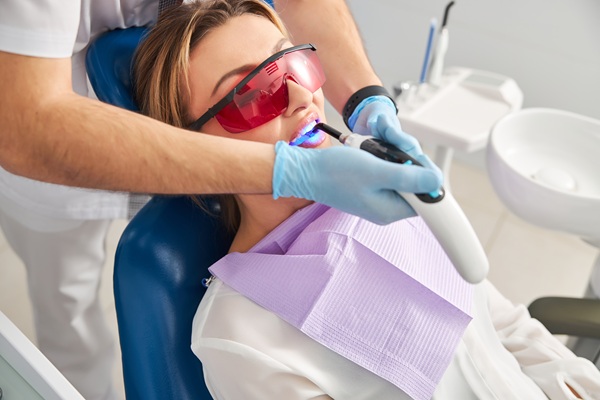
Think of a dental laser as a precise, microscopic flashlight. Instead of using friction or pressure to treat tooth decay or gum disease, the laser uses concentrated light energy to gently remove damaged tissue. Since the light is highly targeted to a specific area, the laser dentist can work on a specific area of the smile without affecting the surrounding healthy areas. This level of control can bring the following benefits:
- Faster healing. The laser actually seals the tissue and blood vessels as it works, which means significantly less swelling and bleeding.
- Minimal discomfort. Most patients find the sensation of the laser much more tolerable than that of traditional deep cleaning or surgery.
- Stronger treatment outcomes. By eliminating more bacteria than a manual tool can reach, the laser creates the ideal environment for the gums to reattach and heal or for a restoration to bond with a treated tooth.
These benefits result from how laser light interacts with the body at the cellular level. By minimizing the trauma to the smile, the dentist can help a patient get back to their normal routine without the lingering soreness that usually follows dental treatments.
Treating cavities without the drill
To treat a cavity, a dentist must remove the decay and prep the tooth for a dental filling or other restoration. In the past, a drill was the only way to do this. This approach can be uncomfortable without local anesthesia, and it often removes more of the healthy tooth structure than necessary.
A laser dentist offers a different approach to cavity treatments. The laser eliminates decay with pinpoint accuracy, leaving more of the natural, strong enamel intact. It also prepares the surface of the tooth on a microscopic level, which helps the filling, crown, or other restoration bond more securely. The result is a stronger treated tooth and a much more relaxed experience from start to finish.
A gentler way to treat gum disease
Gum disease is common, but the thought of gum surgery can be intimidating. Traditional methods involve scalpels and sutures, which can lead to a long, uncomfortable recovery period. Fortunately, laser dentistry has transformed how dentists treat gum disease. Instead of cutting into the tissue, the laser dentist uses the beam of energy to gently remove infected tissue and kill harmful bacteria hidden deep in the pockets of the gums. There is no need for scalpels or sutures. Additionally, this process is precise enough that it rarely affects the surrounding healthy tissue.
Consult a laser dentist today
Dental lasers are among the many tools our team uses to keep patients' smiles healthy. During a consultation, we can assess the size of the cavity or the stage of gum disease to determine whether the laser is the right path forward for you. We also consider patient preference to keep you comfortable throughout your treatment. Contact us at our Brooklyn office today.
Request an appointment here: https://mgdental.com or call MG Dental at (718) 416-6444 for an appointment in our Brooklyn office.
Check out what others are saying about our dental services on Yelp: Laser Dentist in Brooklyn, NY.
Recent Posts
A laser dentist can perform dental procedures with better accuracy and effectiveness. Read on to learn about laser dentistry and how it can help make some treatments more comfortable. The field of dentistry has witnessed significant advancements in the last few years. New technologies are transforming what dentists are able to offer their patients, from…
Laser dentistry has been around for several years. In recent years, it has become more popular because it offers an effective way to perform many procedures. Dentists use lasers to treat a variety of conditions, including tooth decay. Read on to find out when your general dentist may recommend laser dentistry.Many dental professionals believe that…
Laser dentistry is a relatively young concept that can target diseased soft tissue and improve the health of gums, jawbone, and more. Dental lasers are approved by the Food and Drug Administration (FDA), and the risks of the procedure are minimal. Subsequently, dentists often recommend laser dentistry for deep dental cleaning procedures. A routine dental cleaning…
Laser dentistry has transformed how prosthodontists handle many traditional surgical and technical procedures; many advanced devices have been developed to increase the quality of care provided to patients. Dental lasers are developed to treat issues affecting the hard and soft tissues and the teeth.The prosthodontist can use lasers' focused energy to remove excess gum tissue…